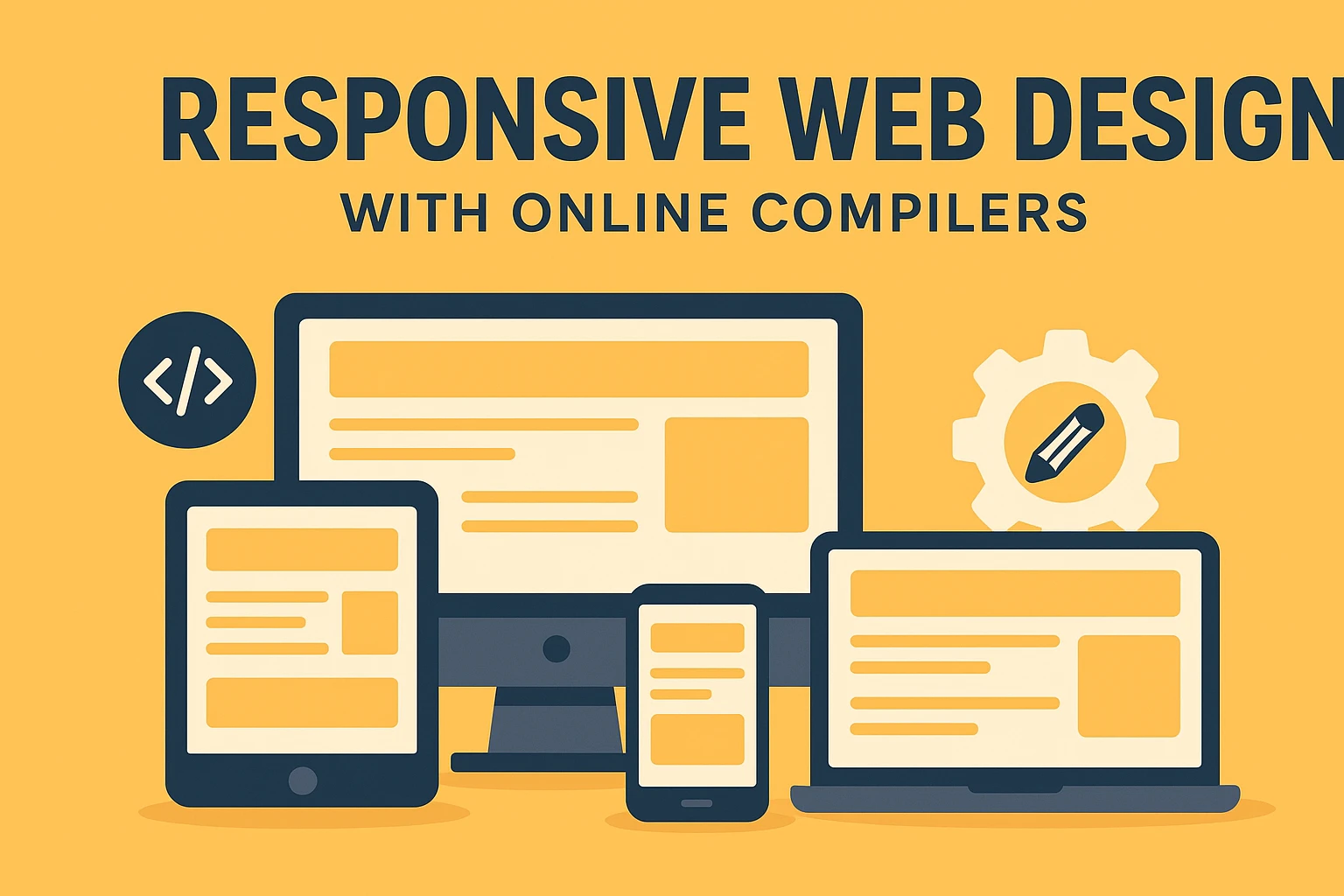
Building Responsive Web Applications with Online Compilers
Rapid frontend prototyping requires agile environments where HTML, CSS, and modern JavaScript can be tested instantly across multiple screen resolutions. While local development environments (Webpack, Vite, Docker) are essential for enterprise builds, lightweight browser compilers allow developers to isolate bugs, experiment with CSS layout algorithms, and share interactive reproductions without configuration overhead.
📘 Table of Contents
- The Evolution of Browser-Based Sandboxes
- Testing Responsive Layouts in Isolated Canvases
- Modern CSS Systems: Grid, Flexbox & Container Queries
- Prototyping Without Security Risks
- FAQ & Developer Checklist
📐 Testing Responsive Layouts in Isolated Canvases
When verifying responsive UI behavior, online compilers offer unique testing advantages:
- Iframe Isolation: Sandbox iframes isolate style cascades and prevent global CSS pollution from leaking into target components.
- Dynamic Viewport Emulation: Testing responsive breakpoints (
sm,md,lg,xl) directly within browser windows ensures clean responsive behavior before staging commits. - Rapid Reproduction: When reporting bugs to UI libraries or teammates, a single in-browser sandbox provides an unambiguous, executable reproduction.
In-Browser Code Sandboxes vs. Heavy Local Environments
While local development environments (Webpack, Vite, Docker) are essential for enterprise application builds, lightweight browser compilers allow developers to isolate bugs, experiment with CSS layout algorithms, and share interactive reproductions without configuration overhead.
Key Architectural Benefits
- Zero Configuration: Test ideas without running npm install or wrestling with dependency version conflicts.
- Iframe Sandbox Isolation: Sandbox iframes isolate style cascades and prevent global CSS pollution from leaking into target components.
- Instant Device Emulation: Testing responsive breakpoints (sm, md, lg, xl) directly within browser windows ensures clean responsive behavior before staging commits.
Building Modern Sandboxes with Web Workers
Modern web compilers leverage Web Workers and service workers to compile code directly in the client without sending proprietary snippets over network cables.
// Sandboxed Execution Pattern
const worker = new Worker('/compiler-worker.js');
worker.postMessage({ code: sourceCode, language: 'typescript' });
worker.onmessage = (event) => {
  renderPreview(event.data.compiledJs);
};
Best Practices for Online Prototyping
- Never Paste Secrets: Avoid inserting active API keys, production tokens, or private credentials into prototype code.
- Test Multiple Dimensions: Validate component behavior at minimum mobile widths (320px) up to 4K displays.
- Export Clean Code: Once prototypes are verified, export the clean markup directly into your Git repository.
Frequently Asked Questions (FAQ)
Can online compilers handle complex TypeScript code?
Yes, modern client-side compilers bundle the official TypeScript compiler via WebAssembly to transpile TypeScript to ECMAScript directly in browser memory.
Is code executed in my browser or on remote servers?
Modern developer utilities like Toolaska run all compilation and formatting locally in the browser, ensuring your intellectual property remains private.